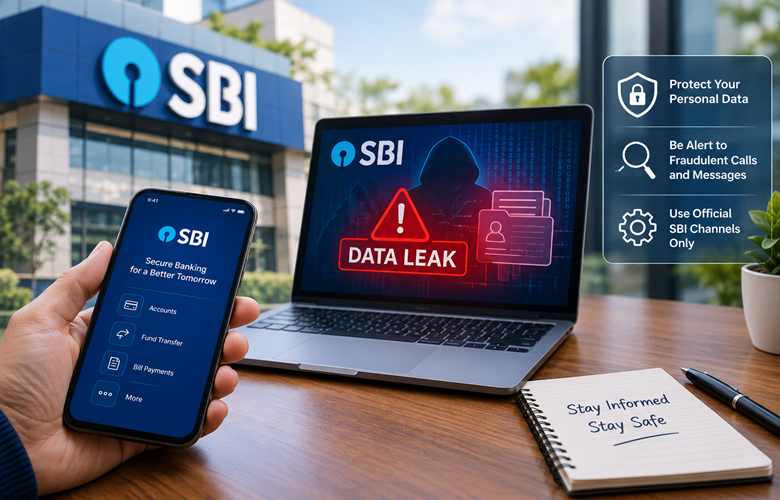
News of the SBI Cyberattack 2026 and a reported data leak involving the State Bank of India (SBI) has raised an understandable question for customers: does this mean their money or account access is at risk? The bank has disclosed an incident involving the loss of certain data and said its preliminary review identified 3,897 customer records containing personal information in a much larger collection of records found circulating on the dark web. SBI has initiated a detailed assessment and engaged an independent cybersecurity agency to investigate the incident and evaluate potential risks to customer information.
The distinction matters. The larger collection reportedly contained around 3.75 lakh entries, but SBI’s preliminary analysis identified 3,897 records containing personally identifiable information. The bank has not yet established the full source, authenticity or extent of the exposure. Customers should take the report seriously without assuming that every record in the larger dataset is confirmed as a compromised SBI customer record.
This guide explains what has been reported, which details may have been exposed, what the bank has said about operations and balances, and what customers can do now to reduce the risk of impersonation and fraud.
What happened in the SBI cyberattack report?
On 21 October 2026, the State Bank of India (SBI) disclosed a data-related incident, bringing attention to the SBI Cyberattack 2026 and potential customer data security risks. The bank stated that it had received alerts on 16 October from its threat-intelligence service provider, the Defence Cyber Agency, and CERT-In regarding customer data allegedly available on the dark web. SBI activated its cyber-incident response procedures and began examining the material to assess the incident and its potential impact.
The incident came to wider attention after an online threat actor claimed to possess a large dataset associated with SBI. Reports described the collection as containing approximately 375,000 entries in CSV files and thousands of PDF documents. Claims about the full dataset, its origin and all the records it contains remain subject to verification. The bank’s preliminary analysis found 3,897 customer records containing personal information.
That difference should be preserved in headlines and social posts. Saying that 3.75 lakh customer accounts have all been hacked would overstate what is currently established. A data exposure can involve records, documents or identifiers without proving that every associated bank account was accessed or that funds were taken. The investigation must establish how the data was obtained, whether it is genuine and which people are affected.
What customer information may have been exposed?
According to the bank’s disclosure as reported, the information identified in the preliminary review included names, registered mobile numbers, dates of birth, gender, email addresses and residential addresses. The material also reportedly included branch identifiers, Customer Information File (CIF) identifiers, lead IDs, and metadata connected with loan or lead records and related files.
Personal information can be valuable to criminals even when it does not include a password. A scammer who knows a person’s name, phone number, address or that they have interacted with a bank may be able to create a convincing call, text or email. Adding loan-related context or internal-looking identifiers can make a fraudulent message appear more authentic.
At the time of this update, the exact scope and authenticity of all material in the larger dataset had not been fully established. Customers should not assume that every category of information listed in online posts is confirmed for every affected person. Equally, people should not dismiss the incident simply because passwords or one-time passwords have not been publicly identified as part of the exposed records.
Does the reported leak mean SBI account balances are unsafe?
SBI has said the incident has not had a material impact on its core operations, financial performance or business continuity. The bank has also reassured customers that their balances remain safe. That is important context, but it should not be interpreted as a guarantee that every customer faces zero risk from every possible type of fraud.
A leak of personal details is different from a confirmed compromise of banking credentials or a transaction system. The information currently described can increase the risk of targeted social engineering: a criminal may pose as a bank employee, claim that a customer’s account is under review, and pressure the person into revealing an OTP, PIN, password or other confidential information. The criminal may try to persuade a customer to install a remote-access app or approve a transaction.
No customer should respond to an unexpected message by sharing credentials or transferring money to a so-called safe account. Banks and legitimate support teams do not need a customer’s OTP, ATM PIN or internet-banking password to verify identity over an unsolicited call. If an alert makes a customer anxious, end the conversation and independently contact the bank through an official channel.
What SBI has said about the investigation
SBI said it had activated incident-response and containment protocols and engaged an independent cybersecurity agency empanelled by CERT-In to carry out a comprehensive assessment. The work is intended to examine the nature and extent of the exposure, test the authenticity and completeness of the data, determine the likely source and assess the risks to customers and the bank.
The public disclosure does not establish the exact technical route by which the data left its original environment. It would be premature to attribute the incident to a specific vulnerability, employee, contractor or system before the investigation reaches a supported conclusion. In cyber incidents, possible causes can include compromised credentials, an exposed service, a third-party system or data copied during an earlier event. These are general possibilities, not findings about this case.
The next useful updates should clarify which data has been validated, whether affected customers can be identified, what containment steps have been completed and whether additional protective action is needed. Customers should look for dated, official communication and be cautious of messages that claim to offer special access to leaked files or instant account protection.
What SBI customers should do right now
First, check your recent account activity through the official mobile app, internet banking or another trusted bank channel. Look for transactions, beneficiaries, mandates or profile changes you do not recognise. If you find something suspicious, contact the bank promptly and follow its instructions for blocking access or disputing the transaction.
Second, be alert to unexpected calls and messages. A scammer may know your name or other personal details and use them to sound credible. Do not treat knowledge of your address, phone number or bank relationship as proof that the caller is genuine. Never disclose an OTP, PIN, password, CVV or full card credentials to someone who contacts you unexpectedly.
Third, avoid clicking links in unsolicited messages about the alleged leak, KYC expiry, account suspension, refunds or compensation. Open the bank’s app yourself or type its official website address into your browser. Do not install an app or screen-sharing tool at a caller’s request, and do not approve a UPI collect request or transaction you did not initiate.
Fourth, make sure your registered mobile number and email account are secure. Use a strong, unique password for your email, enable available multi-factor protection and secure your phone with a screen lock. If your phone suddenly loses mobile service without explanation, contact your telecom provider through an official channel because SIM-related fraud is one possible route criminals may attempt.
Finally, keep alerts enabled where available and review statements regularly. You do not need to panic-change every credential solely because a report has appeared, but if you reused a password, shared credentials, clicked a suspicious link or see unusual activity, take immediate action through official support.
How to recognise data-leak-related scams
Scammers often turn a genuine news event into a fake emergency. A message may claim that your SBI account will be blocked within minutes unless you complete KYC, that the bank is issuing compensation, or that you must verify a leaked customer ID. The message may include a logo, a partial address or an account-related reference to create urgency.
Watch for pressure tactics: requests to act immediately, threats of arrest or account closure, offers to reverse a suspicious transaction if you pay a fee, and instructions to move funds to another account. Poor spelling can be a warning sign, but polished language is not proof of legitimacy. The safest response to an unsolicited request is to stop and independently verify it.
Do not download alleged customer lists or search dark-web forums to see whether your details appear. Such sites can expose users to malware, phishing and illegal material, and accessing a list would not reliably prove whether a specific record is authentic. If you receive a message that appears to use your personal details, preserve it and report it through official bank or cybercrime channels instead of forwarding it widely.
If you suspect fraud, act quickly
If money has been debited without permission or you have shared sensitive information with a suspected fraudster, contact SBI immediately using the contact details in the official app, on your card or on the bank’s verified website. Ask the bank what to block or reset and how to register a dispute. Do not rely on a phone number supplied by the person who contacted you.
In India, suspected cyber financial fraud can be reported through the national cybercrime helpline at 1930, and complaints can be filed through the official National Cyber Crime Reporting Portal. Report as soon as possible and keep transaction IDs, timestamps, screenshots, phone numbers and messages that may help investigators. Never pay a person who claims they can guarantee recovery of stolen funds.
Change compromised passwords from a trusted device, revoke unfamiliar sessions where the service allows it, and follow the bank’s advice on cards, digital banking access or UPI. If your device may have been remotely controlled, disconnect it from the network and seek help from a trusted technician. Avoid deleting evidence before you have preserved relevant details.
Why the number of records needs careful interpretation
The headline figure and the preliminary figure describe different things. Reports refer to roughly 3.75 lakh entries in a collection alleged to be linked to SBI. The bank’s preliminary analysis identified 3,897 records containing personal information. It has not yet publicly established that all entries in the wider collection are genuine customer records, nor that every item contains the same level of sensitive information.
That is why responsible coverage should avoid both extremes: claiming that hundreds of thousands of confirmed accounts have been breached, or suggesting that the incident is irrelevant because the preliminary identified count is smaller than SBI’s customer base. For a person whose data is exposed, the risk can be meaningful even when the proportion of the bank’s total customers is small.
The practical risk depends on what information is genuine, whether records can be matched to real people, whether credentials or other sensitive fields are involved, and how criminals use the material. The investigation should provide a clearer basis for assessing these questions. Until then, sensible anti-phishing precautions are appropriate for all customers, without assuming that everyone has been directly affected.
What customers should watch for next
Customers should watch for a clearer assessment from SBI, any direct notification about affected records, updated security guidance and any instructions to change access credentials. They should also pay attention to alerts about suspicious transactions or changes to their registered contact details. If the bank contacts a customer, the person can independently verify the communication using an official channel.
Regulators and cybersecurity teams may examine the incident’s scope and the safeguards around customer data. The public may not receive every technical detail, particularly where disclosure could expose security weaknesses or affect an investigation. Even so, clear communication about customer impact and recommended protective steps is important for trust.
This story is developing. The absence of a newly published update does not establish that the investigation is complete, and a new online claim does not automatically make it true. Any update should be checked for its date, exact wording and whether it comes from an accountable source.
Conclusion: stay alert, not alarmed
The SBI cyberattack report is a serious data-protection issue, but the known facts need to be described precisely. SBI disclosed an incident involving loss of certain data and said a preliminary review identified 3,897 customer records containing personal information within a much larger dataset found online. The bank has launched an assessment and said its core operations and customer balances remain unaffected by the incident.
For customers, the most useful response is practical: monitor transactions, protect credentials, question unexpected calls, avoid suspicious links and contact the bank through verified channels if something seems wrong. Never share an OTP or PIN, and report suspected financial cybercrime promptly.
FactMedia24 aims to keep this update clear and useful as more verified information becomes available. The story should be updated when the bank publishes material new findings, and readers should avoid treating unverified claims about the wider dataset as settled fact.
What this incident means for digital banking habits
Businesses and families should agree on a simple verification habit: if a caller claims to be from a bank and asks for an urgent action, end the call and reconnect using a known official channel. A short pause to verify can prevent a rushed decision from becoming a financial loss.
Customers can also reduce risk by limiting the personal information they share publicly. Birthdays, phone numbers, workplace details and family information can help fraudsters personalise a message. Review privacy settings on social accounts and be cautious about publishing travel plans or identity documents. These steps cannot undo a data leak, but they can make it harder for a criminal to combine leaked information with publicly available details.
Even when a bank’s main systems continue to operate, a data exposure is a reminder that digital safety depends on both institutional controls and individual habits. Customers should use only official banking applications, keep their phone operating system and apps updated, and avoid installing software from links sent by strangers. Public Wi-Fi should not be treated as a trusted place to handle sensitive banking activity unless an appropriate secure connection is in place.
Final publishing checklist
- Recheck the latest SBI disclosure and official customer guidance before publishing.
- Show the exact publication/update date and time on the live article.
- Keep the distinction between the 3,897 identified records and the wider alleged dataset explicit.
- Use the primary keyword naturally; do not repeat it unnaturally in every heading.
- Link to official reporting and customer support resources from the live page.
- Do not publish leaked datasets, customer identifiers, unverified screenshots or fear-based claims.
Update the story when verified findings change and retain a clear correction history.
Frequently Asked Questions (FAQs)
What is the SBI cyberattack news in 2026?
SBI disclosed an incident involving the loss of certain data. Its preliminary analysis identified 3,897 customer records containing personal information in a larger dataset reportedly found on the dark web. The full scope and source are still being investigated.
How many SBI customer records were affected?
The bank’s preliminary analysis identified 3,897 records containing personal information. Reports about a wider collection of around 3.75 lakh entries should not be interpreted as confirmation that every entry represents a compromised customer record.
What information may have been leaked?
Reported categories include names, registered mobile numbers, dates of birth, gender, email and residential addresses, branch and CIF identifiers, lead IDs, and metadata related to loan or lead records. The exact scope remains under assessment.
Are SBI account balances safe after the data leak?
SBI has said customer balances remain safe and that the incident has not materially affected core operations. Customers should still monitor transactions and guard against impersonation scams.
Were passwords, PINs or OTPs leaked?
The public information available at the time of this update does not establish that passwords, PINs or OTPs were part of the exposed records. Do not assume any unsolicited request for these details is legitimate.
What should SBI customers do now?
Review recent transactions, enable alerts, protect email and banking access, ignore suspicious links, and never share an OTP, PIN, CVV or password. Contact SBI through official channels if anything looks unusual.
How can I report SBI-related online fraud in India?
Contact SBI immediately and report suspected cyber financial fraud through helpline 1930 and the official National Cyber Crime Reporting Portal. Keep transaction details and evidence.
Should I change my SBI password immediately?
If you suspect your credentials were exposed, reused, or entered on a suspicious page, change them using a trusted device and official channels. Do not follow password-reset links from unsolicited messages.
How do I know if a message about the leak is genuine?
Do not use links or phone numbers in unexpected messages. Independently open the official banking app or website, or call a verified number. Treat urgency, threats and requests for secret credentials as warning signs.
Has SBI confirmed the source of the data leak?
The bank said a detailed assessment is needed to establish the authenticity, source and extent of the exposed data. The cause should not be treated as confirmed until the investigation provides reliable findings.
What do you feel about this post?

Like

Love

Happy

Haha

Sad